

This Monday June 15 brings news that matters more to Iraq than to almost any other nation on earth: the US-Iran war is ending. A peace deal was reached over the weekend, Trump ordered the naval blockade lifted, and the Strait of Hormuz — the waterway through which much of Iraq’s oil reaches global markets — is reopening. Gold has climbed to $4,325 per ounce on the news. For Iraqi families, businesses, and the national economy, this is the most consequential development of 2026.
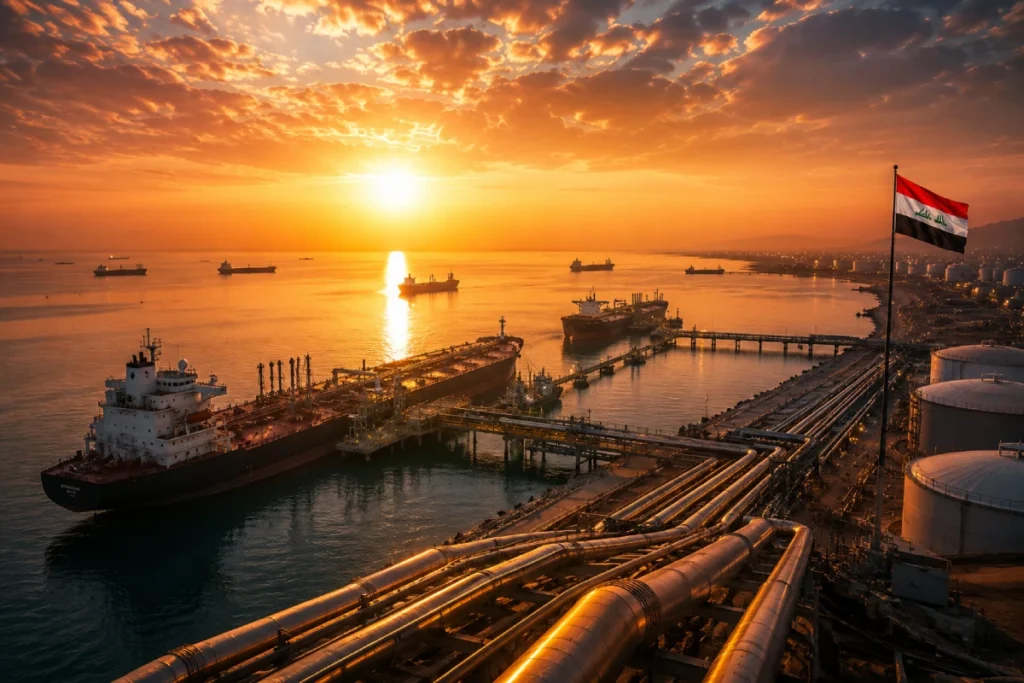
For 107 days, Iraq has borne the economic weight of a war fought on its doorstep. The closure of the Strait of Hormuz disrupted Iraqi oil exports, raised tanker insurance costs across Gulf shipping routes, reduced buyer access to Iraqi crude, and pressured the Iraqi dinar. As OPEC’s second-largest producer, pumping around 4.2 million barrels per day with more than 90% of government revenue tied to oil exports, Iraq is uniquely exposed to anything that obstructs Gulf shipping. The Hormuz closure was that obstruction. Its reopening is Iraq’s relief.
The deal’s terms are favourable for the region. A 14-page memorandum of understanding establishes a 60-day ceasefire, the lifting of US oil sanctions on Iran, and the immediate reopening of the Strait of Hormuz for international shipping, with full de-mining committed within 30 days. Today’s G7 summit is discussing the de-mining process, with Britain and France offering to assist. As Trump put it in authorising the reopening: “oil will flow on both ends again for the Region, and the World.” For Iraq, normalised Hormuz shipping means oil exports flow freely, insurance costs fall, buyer access returns, and government revenues stabilise.
The neighbourly dimension matters too. Iraq shares a long border and deep economic and cultural ties with Iran. The end of the war reduces the risk of regional spillover, restores cross-border commerce, and opens the prospect of Iraq participating in the eventual reconstruction of an Iranian economy that absorbed an estimated $270 billion in war damages. A stable, post-war region is unambiguously in Iraq’s interest.
For Iraqi gold buyers and investors, the picture is now clearer than it has been since February. Gold fell to a seven-month low near $4,070 last week as the war’s oil-inflation mechanism suppressed the price. With the war ending, that suppression is lifting — oil is falling, inflation will follow, and gold has already begun to recover, climbing to $4,325. The structural case is intact and unobstructed: J.P. Morgan reaffirmed its $6,300 year-end target even after gold’s steepest decline since 1983, and Goldman Sachs holds $5,400. From today’s price, those targets imply gains of 25% to 46%.
For a nation that has held gold through wars, sanctions, and upheaval across generations, the end of this war is a moment of relief and vindication. Tomorrow’s FOMC meeting under new Fed Chair Warsh is the next catalyst. But the most important news for Iraq has already arrived: the war next door is ending, the Strait is reopening, and gold — which protected Iraqi wealth throughout — is beginning to climb again.
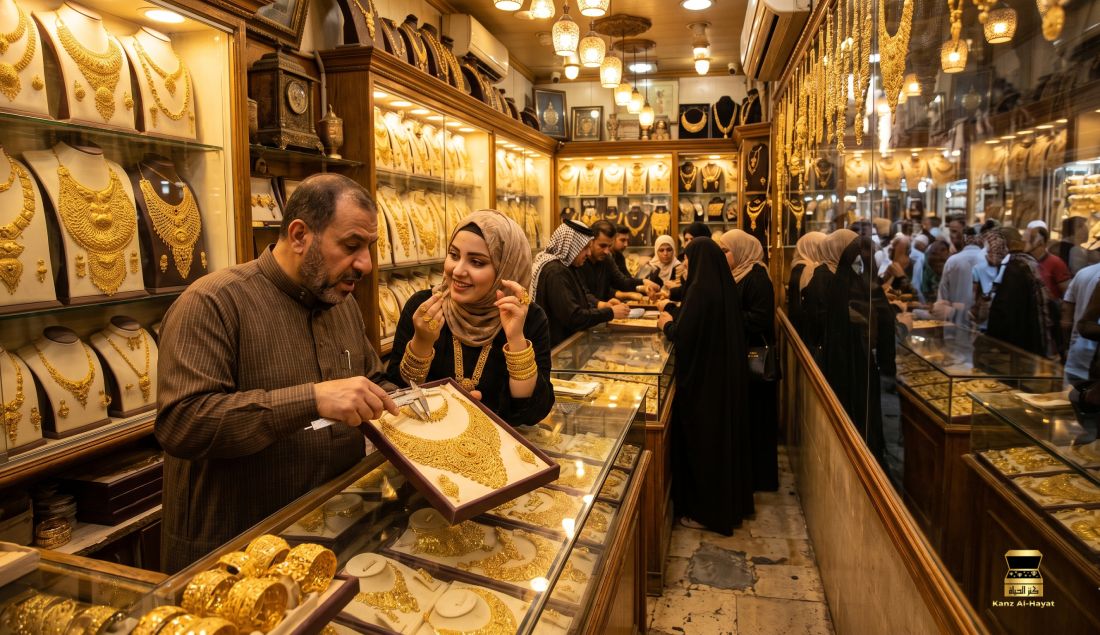
Today’s prices: 24K — $139.07/gram | 22K — $127.48/gram | 21K — $121.66/gram
All prices USD. Indicative only. Please confirm in store.