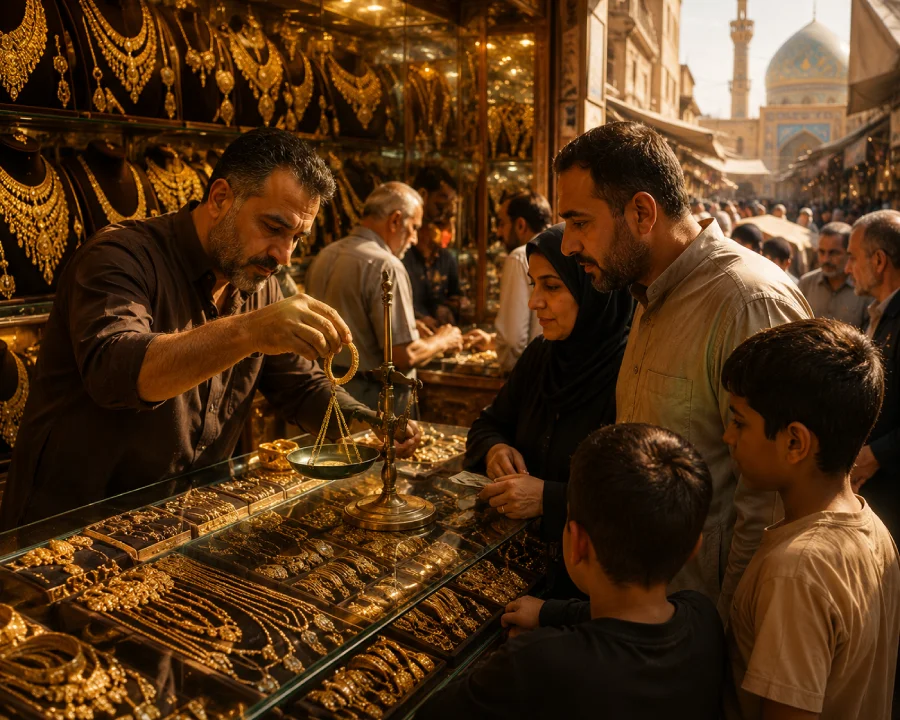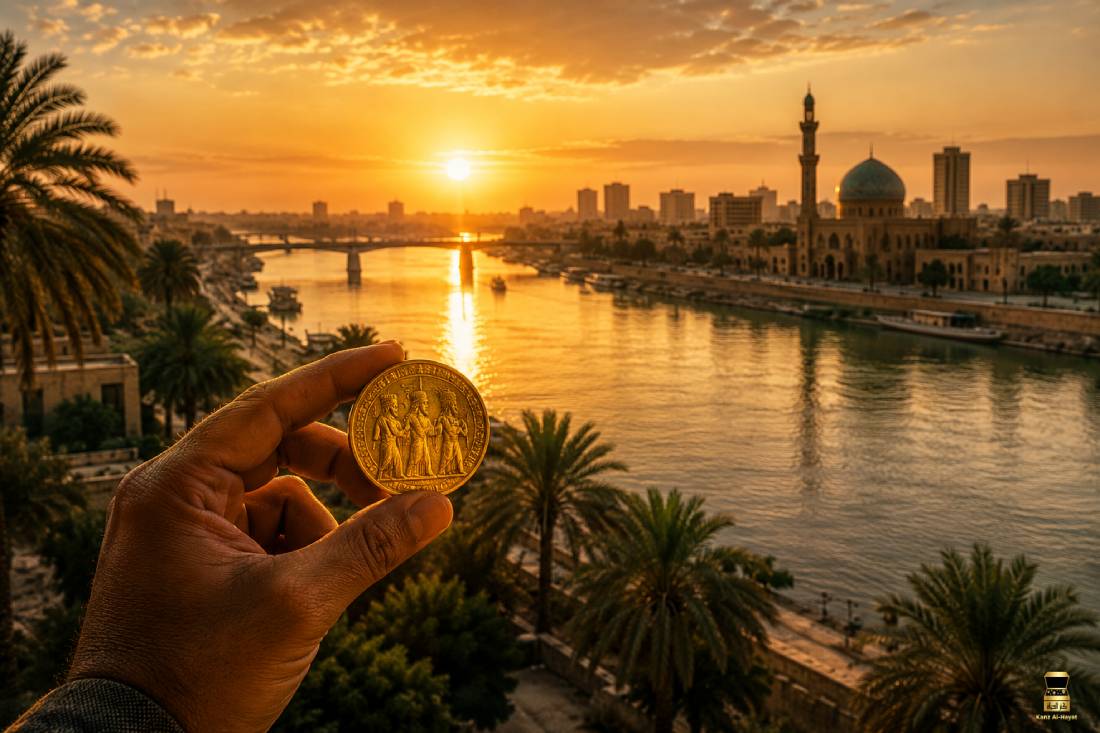


The US-Iran war began on February 28, 2026. Today is June 8 — 100 days since the conflict that closed the Strait of Hormuz and reshaped every major economic force in the region. For Iraq, which shares a long border with Iran, depends on Gulf waterways for its oil exports, and holds deep commercial and cultural ties with Tehran, these 100 days have been a period of economic strain, regional uncertainty, and — for those who held gold — the most important test of patience in a generation.
Gold opens this Monday at $4,340 per ounce, down roughly 22% from January’s all-time high of $5,595. This morning Israel struck Iran’s Mahshahr petrochemical complex and military targets in western and central Iran, the first attack on an Iranian energy site since the April 8 ceasefire. Brent crude surged 4.47% to $97.15 per barrel. Trump stated that the strikes will not affect his peace talks with Tehran and added that Netanyahu “doesn’t call the shots.” The peace framework for Hormuz de-mining within 30 days — agreed ten days ago — is under its most serious stress yet.
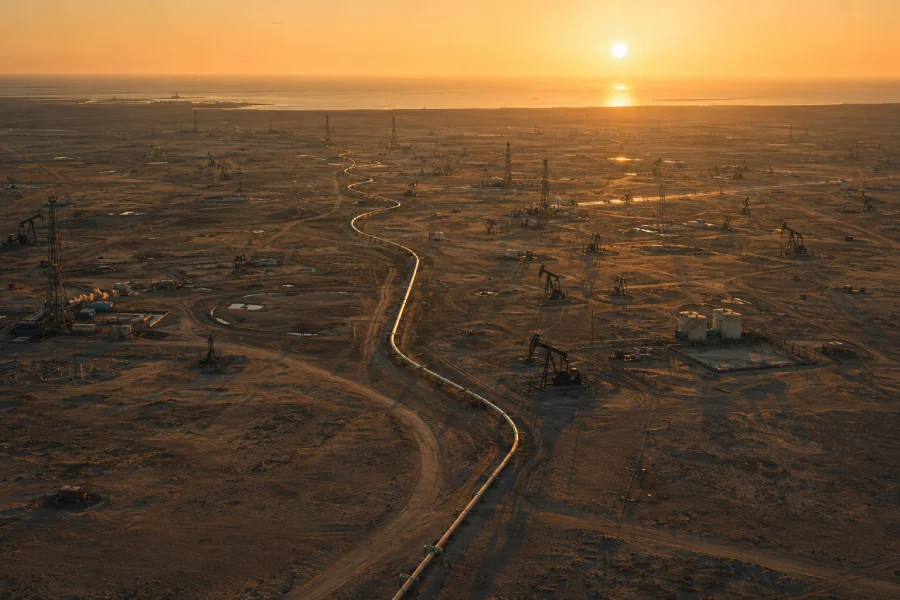
For Iraq, 100 days of the Hormuz war means: oil export disruptions as Gulf shipping logistics remained volatile; elevated insurance costs for tankers operating in Iranian-adjacent waters; import cost increases for goods arriving through Gulf ports; and pressure on the Iraqi dinar from a combination of these factors. The elevated oil price — $97.15 today — sounds like positive news for an oil exporter. In practice, it has been partially offset by the disruption costs and market uncertainty that reduce the net benefit to Iraqi government revenues.
The $270 billion in war damages that an Iranian official cited last month remains the most important number in the entire peace equation. Iran’s economy is in acute distress. Every additional week of conflict adds to that damage. The economic pressure on Tehran to settle is greater today than it was on day one. Trump confirmed this morning that his peace talks with Iran continue despite the Israeli strike. For Iraq, a genuine Hormuz resolution is worth more economically than any short-term benefit from elevated oil prices — because it normalises shipping, lowers insurance costs, stabilises regional trade, and allows Iraqi oil to flow freely to Asian buyers.
For Iraqi families and investors holding gold: the 100-day low near $4,340 represents the deepest discount of the war period, with an implied upside of 24% to Goldman Sachs’s $5,400 year-end target and 45% to J.P. Morgan’s $6,300. Gold is still 34.3% higher than one year ago. The structural story — central bank buying at record rates, mine supply growing at just 1–2% per year, global debt concerns accumulating — has not changed in 100 days. The mechanism suppressing the price, the oil-inflation-rate chain, has a known end date: the day Hormuz opens.
This week: May CPI arrives Wednesday June 11. PPI arrives Thursday June 12. The June 18 FOMC meeting under new Chair Kevin Warsh follows. Iraq watches all three — and watches Iran’s response to this morning’s Mahshahr strike — more closely than any market outside the region.
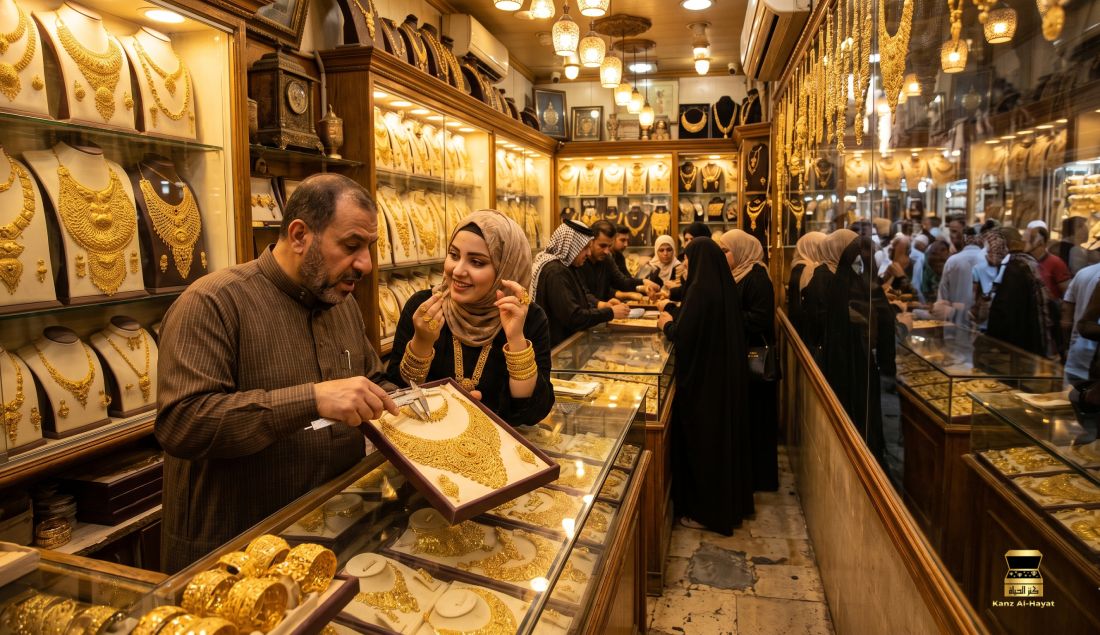
Today’s prices: 24K — $138.68/gram | 22K — $127.12/gram | 21K — $121.25/gram All prices USD. Indicative only. Please confirm in store.