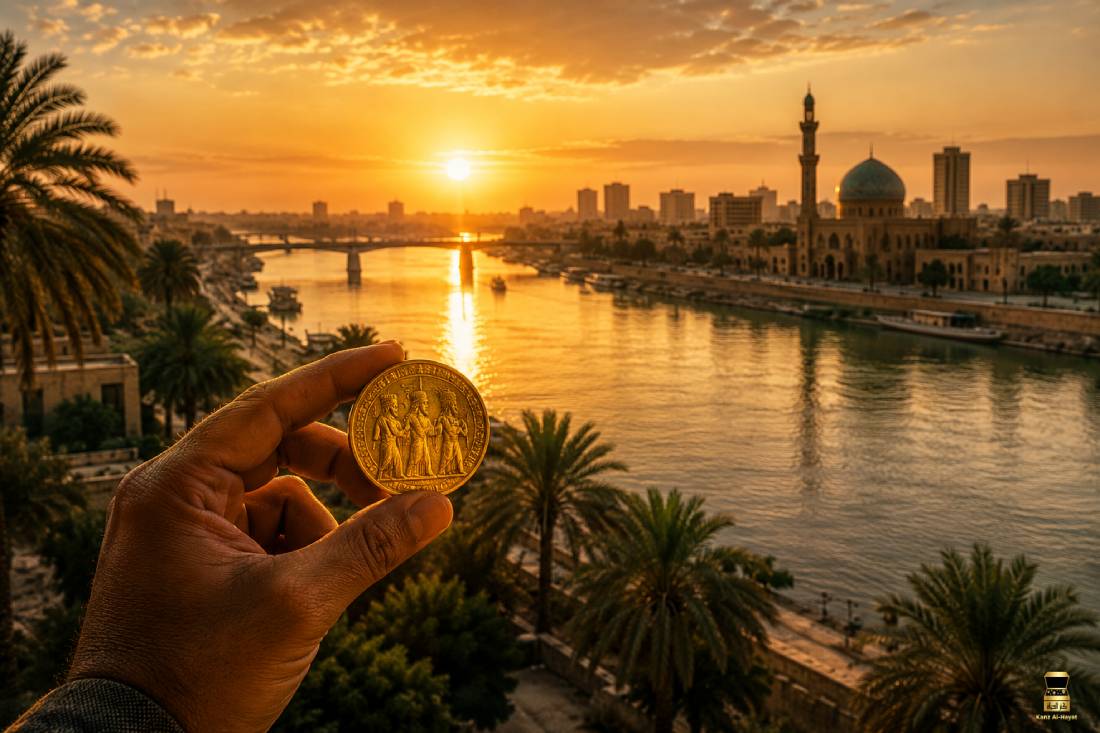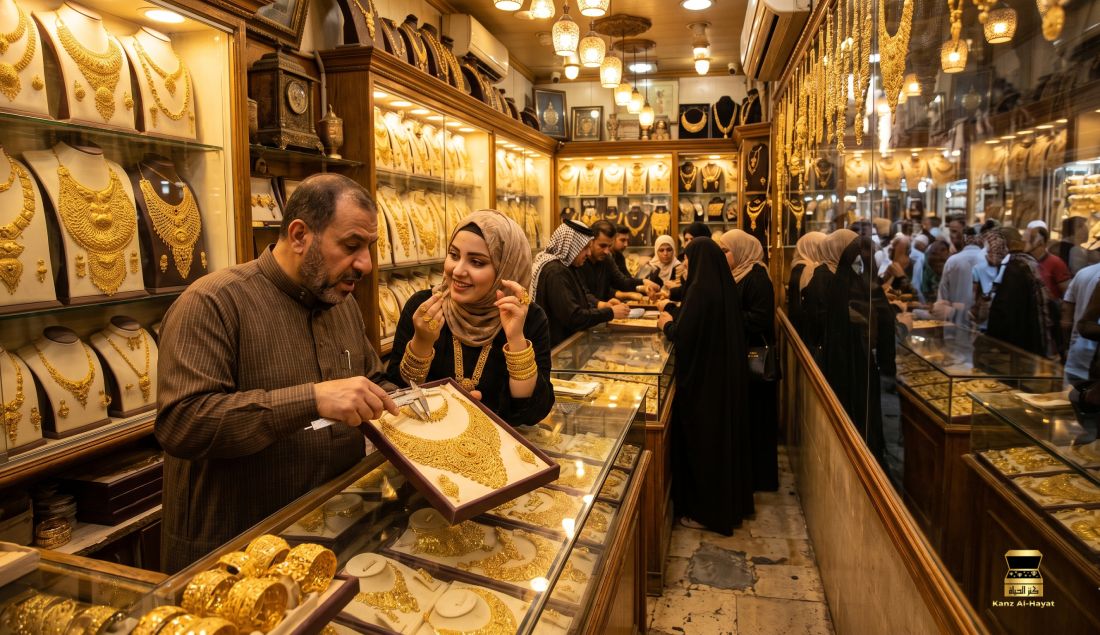


Gold holds at approximately $4,349 per ounce this Wednesday June 17, up 3.6% on the week, as the world absorbs two converging forces: the US-Iran peace deal that is reopening the Strait of Hormuz, and today’s Federal Reserve decision in Washington. For Iraq — the nation most directly affected by the Hormuz closure and deeply tied to both regional stability and global gold prices — this is a pivotal week.
The peace dividend has begun. The US-Iran deal reached over the weekend reopened the Strait of Hormuz and sent oil to a two-month low. For Iraq, OPEC’s second-largest producer with more than 90% of government revenue tied to oil exports through Gulf waterways, the reopening of Hormuz is transformational. The disrupted shipping logistics, elevated tanker insurance costs, and reduced buyer access that strained the Iraqi economy for 107 days are now beginning to normalise. Oil can flow freely to Asian markets again. Government revenues can stabilise. The economic pressure that the war placed on Iraq is lifting.
Today’s Federal Reserve decision adds the second force. At 2:00 PM Eastern Time, the Fed announces its rate decision — expected to hold at 3.50% to 3.75% — and publishes its updated dot plot. At 2:30 PM, new Chair Kevin Warsh holds his first press conference. The key question for gold, and therefore for Iraqi gold holders, is whether the Fed acknowledges that the peace deal and falling oil will bring inflation down. May inflation was 4.2%, but almost entirely energy-driven — core inflation was just 2.9%. As oil falls following the peace deal, that headline inflation should fade, eventually allowing the Fed to ease, which would weaken the dollar and lift gold.
This matters enormously for Iraqi families and investors. Gold fell to a seven-month low near $4,070 last week as the war suppressed the price. With the war ending, that suppression is lifting, and gold has already recovered to $4,349. The structural case is powerful and intact: central banks bought a net 244 tonnes in Q1 2026, China has accumulated for 17 consecutive months, and the World Gold Council’s 2026 survey found 45% of central banks plan to increase reserves over the next year. Every major bank’s year-end target — Goldman Sachs $5,400, J.P. Morgan near $6,000, Morgan Stanley $5,200, UBS $5,500 — sits 20% to 38% above today’s price.
For a nation that has held gold through wars, sanctions, and upheaval across generations, this week represents the beginning of a recovery on two fronts: the economic relief of a reopened Hormuz and the gold price recovery that follows the lifting of war-driven suppression. Today’s Fed decision shapes the near-term path. The peace deal shapes the longer one. Both point in a direction favourable for those who held gold through the difficult months.
Today’s prices: 24K — $139.84/gram | 22K — $128.18/gram | 21K — $122.36/gram
All prices USD. Indicative only. Please confirm in store.