

This Monday July 20 finds Iraq navigating a prolonged and dangerous chapter of the regional conflict. The US and Iran clashed for a sixth straight day last week, keeping the Strait of Hormuz disrupted and oil prices elevated. Gold sits near $4,000 per ounce, close to an eight-month low. For Iraq — deeply tied to both the oil market and the gold market — this is a moment that demands attention on multiple fronts, with the US Federal Reserve’s key meeting now just nine days away.
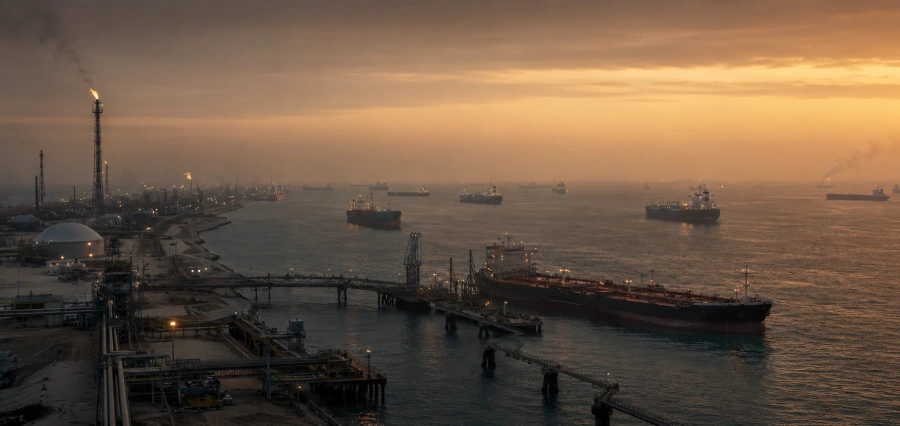
Begin with the Strait of Hormuz, which matters more to Iraq’s economy than almost any other factor. The waterway remains disrupted, with conflicting claims from Washington and Tehran about whether it is open, and a US naval blockade in place. For Iraq, OPEC’s second-largest producer with more than 90% of government revenue tied to oil exports through Gulf waterways, this ongoing disruption is a serious concern. It threatens the reliable passage of Iraqi oil to Asian markets, and elevated war-risk insurance and shipping uncertainty add costs to every shipment. The prolonged nature of the conflict — now stretching across many months with repeated escalations — makes planning difficult for Iraq’s oil-dependent economy.
The oil price picture remains double-edged for Iraq. Crude has stayed elevated on the Hormuz disruption. For an oil-exporting nation, higher prices per barrel would normally boost revenue — but only if the oil can physically reach buyers. With shipping disrupted and the strait contested, higher prices may not fully translate into higher Iraqi revenue. This is the persistent, difficult balance Iraq faces throughout this conflict.
For Iraqi gold buyers, the paradox continues to define the market. Despite the ongoing war, gold has fallen — because the elevated oil drives inflation concerns, which keep the US Federal Reserve restrictive, which pressures gold. This is why gold trades near an eight-month low rather than rallying on the conflict. The Fed’s meeting on July 29 is the key event ahead: it is expected to hold rates, but its signals about a possible September hike will shape gold’s direction.
Yet for Iraqi families who hold gold as a store of wealth across generations, the long-term case remains firmly intact. Gold near $4,000 is roughly 28% below January’s record of $5,597 — among the deepest discounts of the year — yet still up around 18% over the past twelve months. Critically, the world’s central banks continue to accumulate aggressively: China’s central bank has been buying at its fastest pace in more than two and a half years. And the analysts’ base case sees gold recovering toward $4,500 to $4,900 by year-end as the conflict eventually stabilizes. Importantly, gold’s recovery is tied to the war ending — a durable peace would lower oil, ease inflation, free the Fed to cut, and lift gold. This would also be the best outcome for Iraq’s economy.
For a nation that has weathered wars, sanctions, and upheaval across generations, this prolonged conflict is a hard test. But gold continues to serve its timeless role — preserving wealth through precisely these kinds of uncertain times. For Iraqi buyers, gold near $4,000 offers some of the most attractive prices of the year, backed by relentless central bank demand. This week is quieter on data ahead of the July 29 Fed decision, so oil and war headlines will drive the near-term direction.
Today’s prices: 24K — $129.00/gram | 22K — $118.25/gram | 21K — $112.80/gram
All prices USD. Indicative only. Volatile market. Please confirm in store.