

This Wednesday July 22 brings the first genuinely hopeful development in weeks for Iraq and the region. Mediators have proposed a 10-day ceasefire in the US-Iran war, aimed at salvaging the interim agreement signed in June and creating space for broader negotiations. Iran’s Interior Minister, Eskandar Momeni, travelled to mediator Pakistan and asked Islamabad to continue its efforts, with Qatar also engaged. Gold responded by climbing to a two-week high near $4,130. For Iraq — which has borne the economic and security burden of this conflict more directly than almost any nation — even a tentative opening deserves attention.
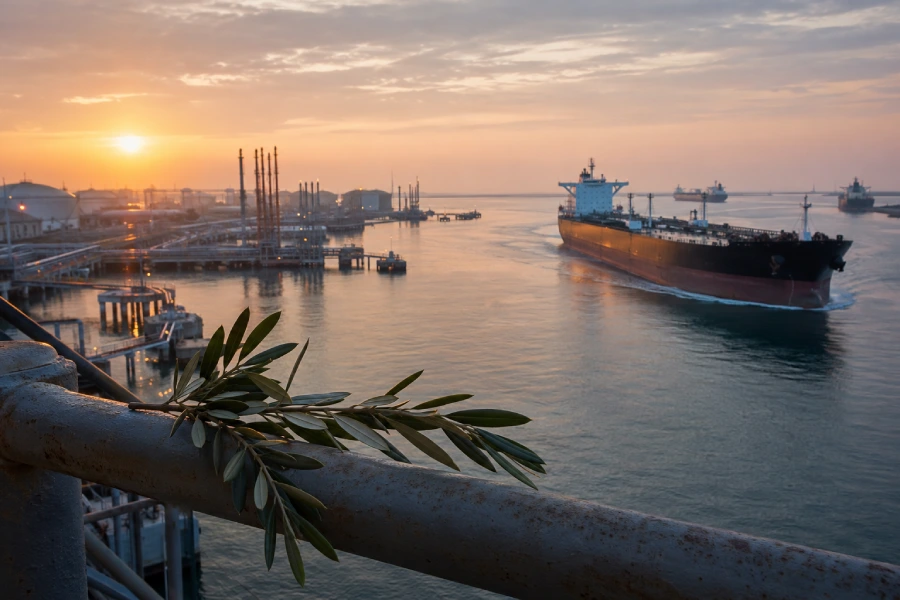
The stakes for Iraq could hardly be higher. As OPEC’s second-largest producer, with more than 90% of government revenue tied to oil exports through Gulf waterways, Iraq depends entirely on the Strait of Hormuz remaining navigable. Through this conflict, that passage has been repeatedly disrupted, and elevated war-risk insurance and blocked routes have added costs to every shipment. A genuine ceasefire — even a 10-day one — would begin to restore the reliable export flows the Iraqi economy needs.
Honesty about the situation is essential, however. The military reality has not improved. US forces struck Iranian targets for an eleventh consecutive night, and Iran responded with attacks on American facilities in Bahrain, Kuwait, and Jordan — all neighbours of Iraq. US Secretary of State Marco Rubio said Washington remains willing to negotiate but argued Tehran is not serious about talks. Adding to regional supply concerns, three oil tankers carrying Saudi crude to Asia reversed course in the Red Sea after threats from Yemen’s Houthis. Markets have repeatedly seen negotiation hopes fade during this war. The proposal is a signal, not a settlement.
For Iraqi gold buyers, the market’s response to the diplomatic news is instructive. Gold rose because peace, not war, is what lifts gold in this unusual conflict — a ceasefire would lower oil prices, ease inflation, and free the US Federal Reserve from the pressure to raise interest rates, all of which supports the metal. This is why gold has fallen 22% since the war began in February despite the historical rule that conflict lifts bullion. The same logic means that genuine progress toward peace would benefit both Iraq’s economy and Iraqi gold holdings simultaneously.
The structural foundation beneath gold remains firm, which matters for Iraqi families who hold gold across generations. Goldman Sachs said this week that persistent central bank buying, led by China, continues to provide a price floor, and the bank maintains a year-end target near $4,900 — roughly 19% above today’s level. Gold at $4,130 is still about 26% below January’s record of $5,597, yet up 21% over the past twelve months.
For a nation that has weathered wars, sanctions, and upheaval across generations, today’s diplomatic signal is welcome, however modest. The Federal Reserve meets July 28–29, and the mediation efforts by Pakistan and Qatar continue. For Iraqi buyers, gold remains at attractive levels well below January’s peak, backed by relentless central bank demand — and for the first time in weeks, there is a reason for cautious hope on the war itself.
Today’s prices: 24K — $132.80/gram | 22K — $121.75/gram | 21K — $116.20/gram
All prices USD. Indicative only. Volatile market. Please confirm in store.