

This Wednesday July 15 presents Iraq with a market of sharp contradictions. On one hand, US inflation is cooling — June’s rate fell to 3.5% from 4.2%, the first monthly decline since 2020 — which is positive for gold and for global economic stability. On the other, the war between the US and Iran continues to escalate on Iraq’s doorstep, with US airstrikes entering a fourth day and oil surging 9% in five days. Gold sits near $4,040 per ounce, caught between these forces. For Iraq — deeply tied to both the oil market and the gold market — this divided moment carries mixed but important implications.
Begin with the war, which affects Iraq most directly. US airstrikes have targeted Iranian military sites for four consecutive days, in retaliation for Iranian attacks on ships in the Strait of Hormuz. President Trump says the bombardment will continue until the strait is opened and safe for merchant ships, and the US has reinstated its naval blockade of Iranian ports. Iran continues to declare the strait closed. For Iraq, OPEC’s second-largest producer with more than 90% of government revenue tied to oil exports through Gulf waterways, this ongoing disruption is deeply concerning — it threatens the reliable passage of Iraqi oil to Asian markets.
The oil price picture is complex for Iraq. Crude has surged more than 9% over five days on the war escalation. For an oil-exporting nation, higher prices per barrel would normally boost revenue — but only if the oil can physically reach buyers. With the Strait of Hormuz contested and shipping disrupted, higher prices may not translate into higher Iraqi revenue if export volumes are constrained. This is the difficult balance Iraq faces: elevated prices offset by disrupted logistics.
Notably, the cooling of US inflation in June was itself partly a result of lower oil prices during that month — a reminder of how central the oil market, and therefore the Strait of Hormuz, is to the entire global economic picture. Now that July’s war escalation has pushed oil back up, there is a risk that inflation could reverse its improvement, which would keep the US Federal Reserve cautious.
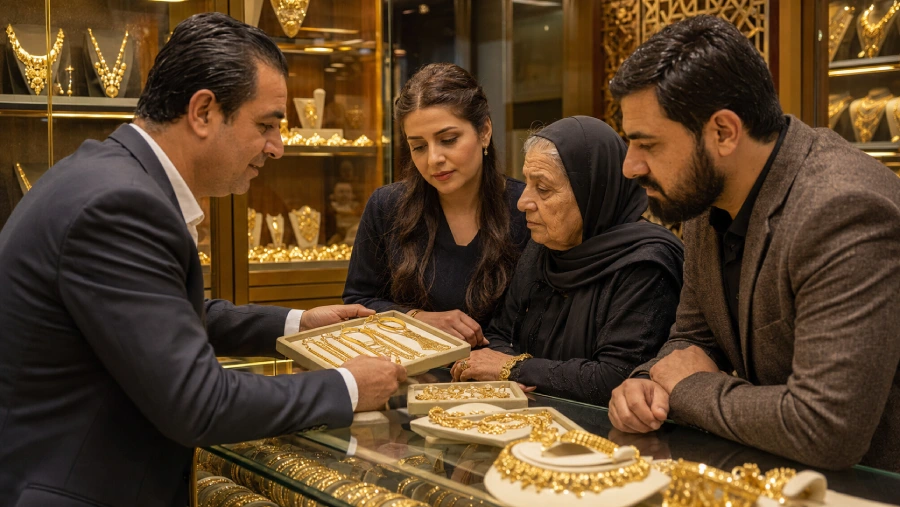
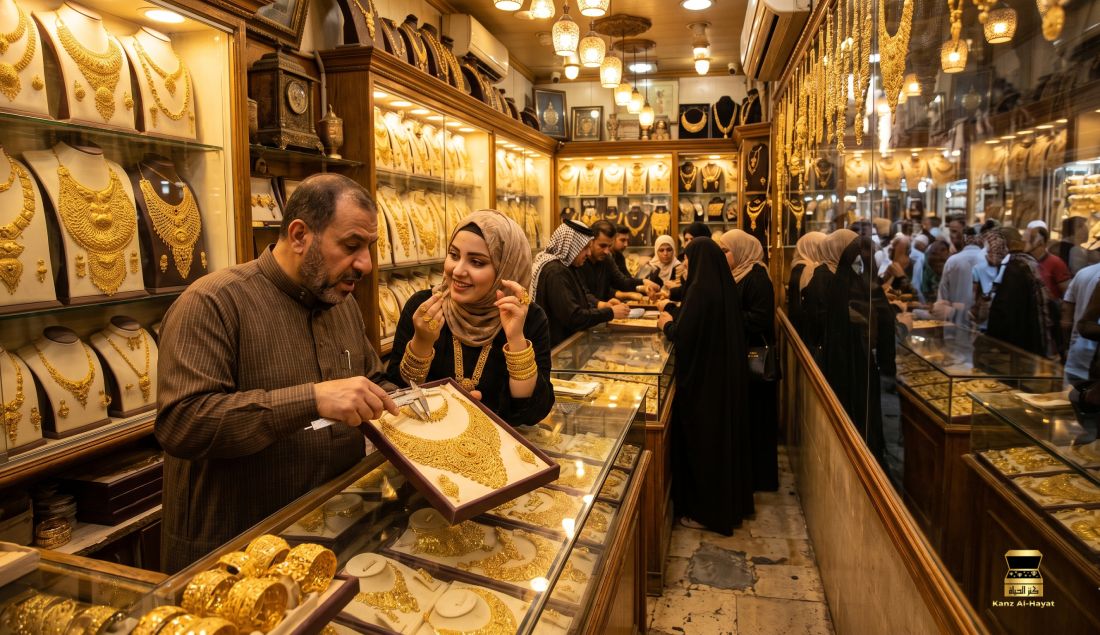
For Iraqi gold buyers, the divided market has kept gold in a tight range near $4,040 — roughly 27% below January’s record of $5,597, and still up 21.3% over the past year. The cooling inflation supports gold, while the war-driven oil surge caps it. But for Iraqi families who hold gold as a store of wealth across generations, the long-term case remains firmly intact. The world’s central banks continue to accumulate aggressively: China’s central bank bought gold in June at its fastest pace in more than two and a half years. This steady sovereign demand provides a durable floor.
For a nation that has weathered wars, sanctions, and upheaval across generations, this week’s divided market is a reminder of gold’s enduring role. The war is dangerous and its economic effects are real, but gold continues to serve its timeless purpose — preserving wealth through precisely these kinds of uncertain times. This week’s remaining data and the July 29 Fed decision will shape the near-term direction. For now, gold near $4,040 offers Iraqi buyers some of the most attractive prices of the year.
Today’s prices: 24K — $130.65/gram | 22K — $119.75/gram | 21K — $114.25/gram
All prices USD. Indicative only. Volatile market. Please confirm in store.