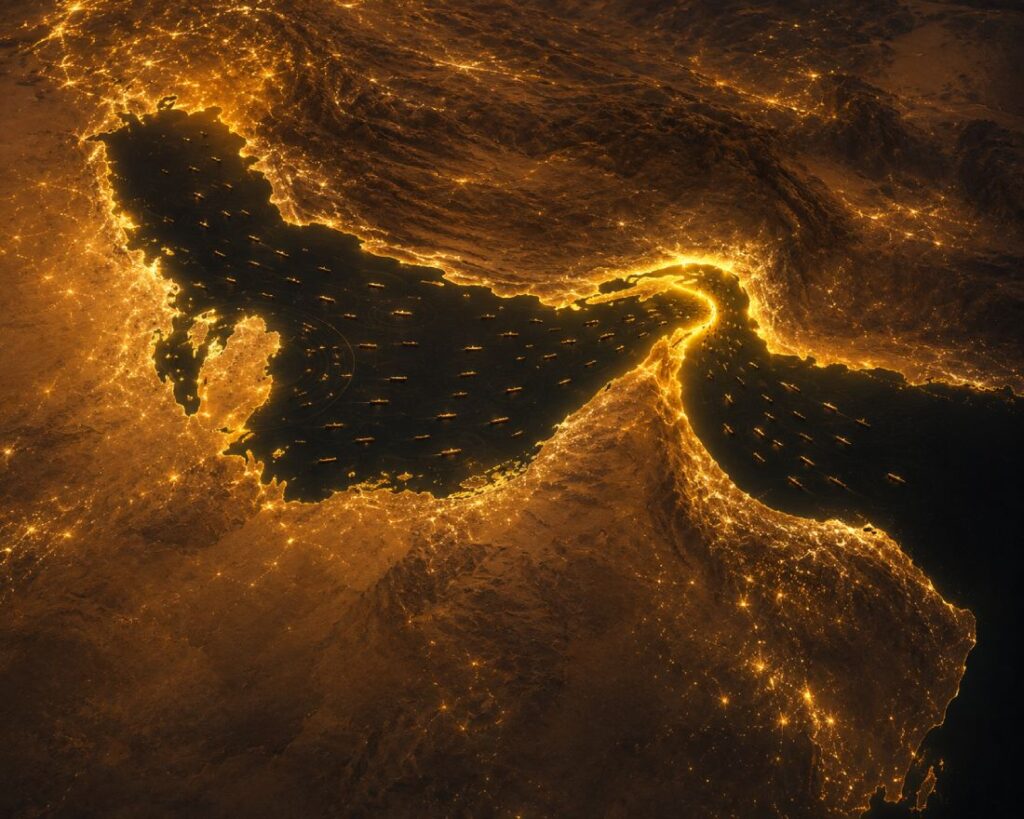


Gold is at $4,524 per ounce this Friday May 22, and the Strait of Hormuz has now been effectively closed for 84 days. For Iraq — whose oil exports, import costs, and economic stability are all directly tied to Gulf waterways — 84 days of Hormuz disruption is not an abstraction. It is a mounting economic toll that this week’s news has both deepened and, in one important sense, begun to resolve.
The deepening comes from Thursday’s news: Iran’s Supreme Leader Ayatollah Khamenei issued a formal directive that near-weapons-grade enriched uranium must not leave Iranian soil under any peace agreement. This directly contradicts the US and Israeli minimum requirement for a deal. Talks that Trump was calling “final stage” on Wednesday hit this wall on Thursday. Oil jumped 3.4% back above $106 per barrel. The IEA chief warned that oil markets are approaching a “red zone” as strategic reserves are drawn down.
The partial resolution comes from the quiet but significant fact established at the Trump-Xi summit last week: China — Iran’s most powerful economic patron — publicly committed to the position that Hormuz must remain open and that Iran should not militarise it. Chinese vessels have reportedly begun transiting the Strait under new protocols. This is a structural shift in the diplomatic architecture. Iran’s economy, already severely stressed by the war, is now operating with reduced Chinese cover for its Hormuz strategy. The timeline to resolution has shortened even if this week’s uranium news extended the path.
For Iraq, the arithmetic of resolution is straightforward. Iraq’s oil exports travel primarily through the Persian Gulf and partly through Basra terminals that rely on Gulf tanker routes. The disruption to Gulf shipping has increased insurance premiums, reduced the number of willing buyers, and added logistical costs to every barrel Iraq exports. Concurrently, Iraq’s import costs — for food, manufactured goods, and consumer products that arrive through Gulf ports — have risen with the elevated freight and energy environment. Iraqi families are absorbing these costs daily in the form of higher prices for basic goods.
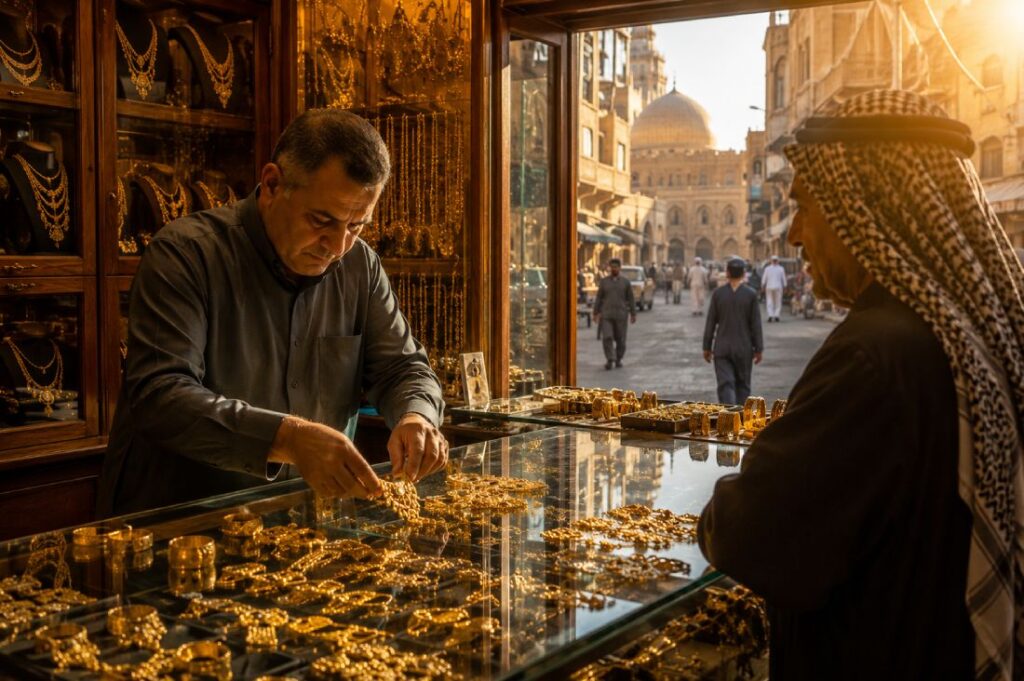
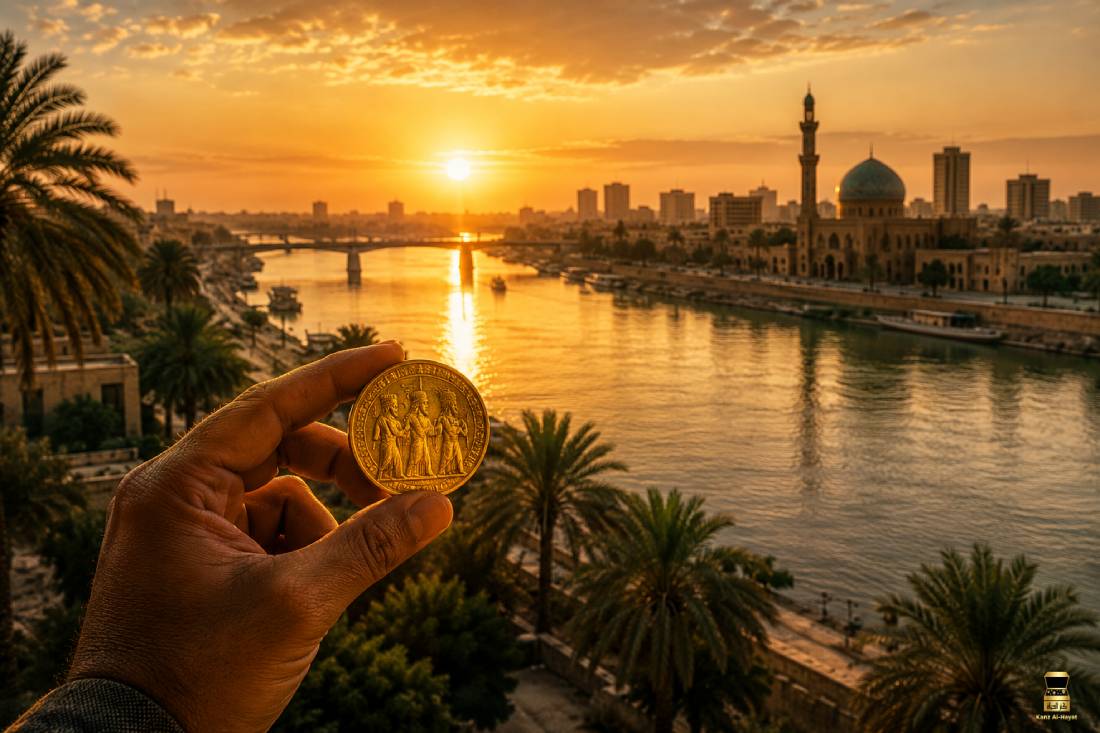
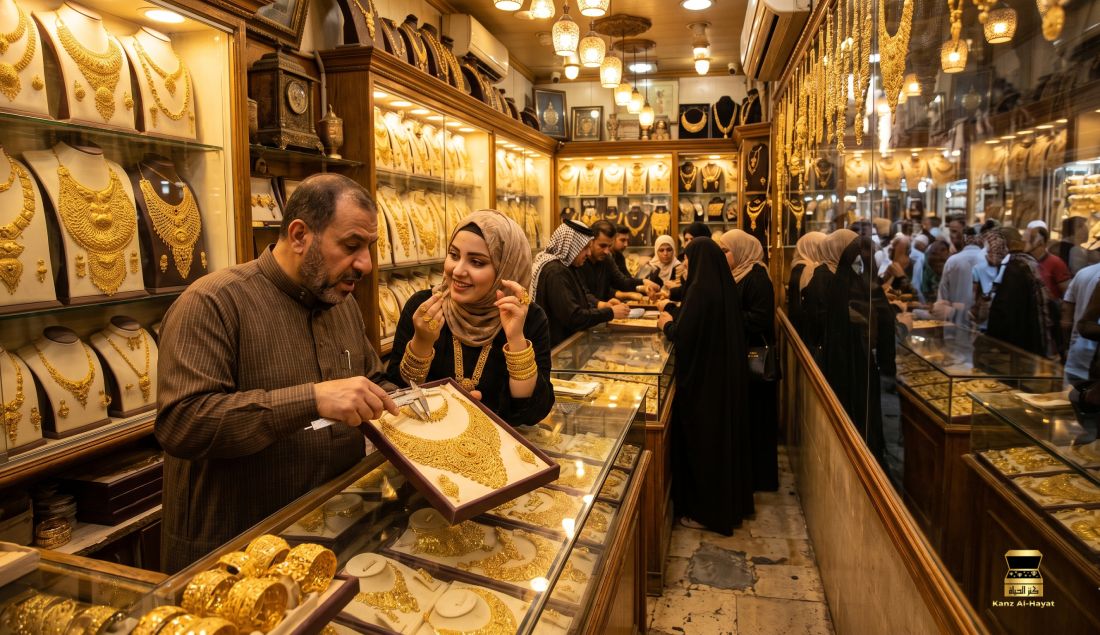
The gold market in Iraq has absorbed all of this with characteristic resilience. Physical gold demand in Iraq has remained steady through the entire conflict period, as families and investors recognise gold as the most reliable store of value in an economically uncertain environment. The structural case is clear: gold at $4,524 is 34.7% higher than one year ago and 19% below its January all-time high of $5,595. Goldman Sachs targets $5,400 by year-end. The path to that target runs through a Hormuz resolution — which China’s new position makes meaningfully more likely than at any point since February 28.
Today’s PMI data and Michigan inflation survey will move gold modestly. Next Thursday’s Q1 GDP data will be more significant. But the biggest catalyst for Iraqi gold buyers remains the same as it has been for 84 days: the day Hormuz reopens.
Today’s prices: 24K — $145.61/gram | 22K — $133.48/gram | 21K — $127.41/gram All prices USD. Indicative only. Please confirm in store.