

This Wednesday August 5, Iraq watches what may be the endgame over the Strait of Hormuz — the waterway that carries the nation’s economic lifeblood. Washington says a deal to reopen the strait could be reached “today or tomorrow.” President Trump threatens “decapitation” and Iran’s bridges “decimated by midnight tomorrow” if it is not. Between these poles sits the reality Iraq knows intimately: a strait still blockaded, a corridor barely functioning, and a region holding its breath. Gold, meanwhile, has risen three straight days to two-week highs near $4,130. Here is where matters stand, told honestly, for Iraqi readers.
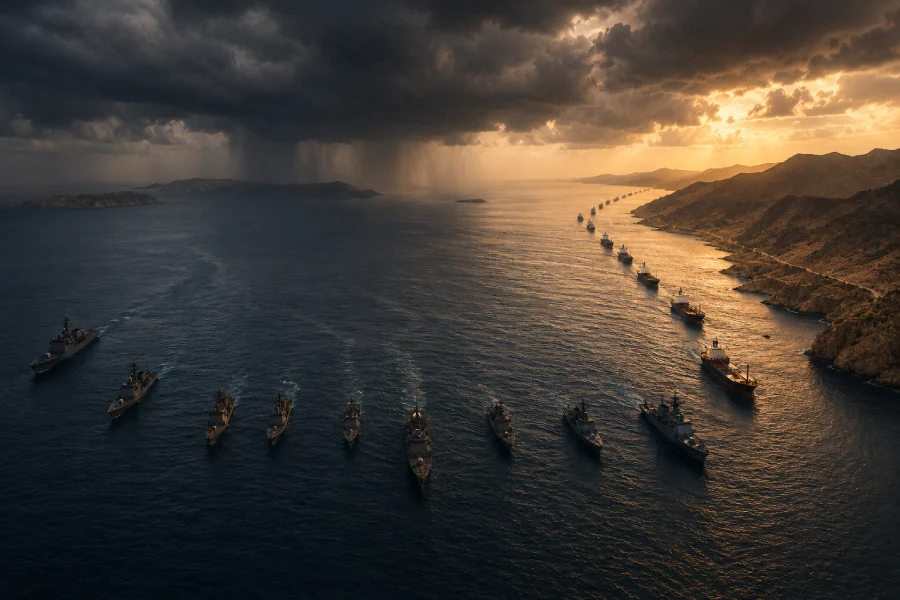
Begin with the state of the strait itself, because the details matter for Iraq’s oil economy. The United States now operates what Trump calls a “Wall of Steel” — a naval blockade that has redirected 44 commercial vessels, disabled two, and boarded two more. Iran, for its part, maintains its own blockade of the waterway and insists on retaining control and charging transit fees, which Washington rejects. The Iran-Oman corridor that raised hopes on Monday remains real but limited: Tehran’s spokesman clarified it is a single, temporary route, and — in his words — “has no connection to whether the Strait of Hormuz is open or closed.” On Sunday, a tanker off Oman reported hearing a nearby explosion. For Iraq, OPEC’s second-largest producer with over 90% of state revenue tied to exports through these waters, every one of these details translates directly into national income.
Yet genuine movement is underway, and it deserves recognition. Treasury Secretary Bessent confirmed plainly: “We are in talks with the Iranians,” projecting a Hormuz deal possibly “today or tomorrow.” Secretary of State Rubio reported progress. Trump outlined a two-phase structure — the strait reopening first, denuclearization second — matching the memorandum both sides signed in June. Oil prices fell on the optimism, and US stock markets touched record highs. If this deal lands, the consequences for Iraq would be transformative: full export routes restored, war-risk insurance falling, and the regional stability Iraq’s reconstruction requires. Trump’s own prediction — that oil will “drop through the floor” when the conflict ends — cuts both ways for Iraq, lowering prices but restoring the volumes and reliability that matter more.
Honesty requires the caution too. Iran’s leadership is reportedly divided over ending the war. Tehran insists nothing meaningful changes while the US blockade stands. This war has seen deadlines pass and hopeful moments collapse — twice in the past month alone. The next 48 hours could bring a signed deal, devastating escalation, or — as often before — an ambiguous continuation.
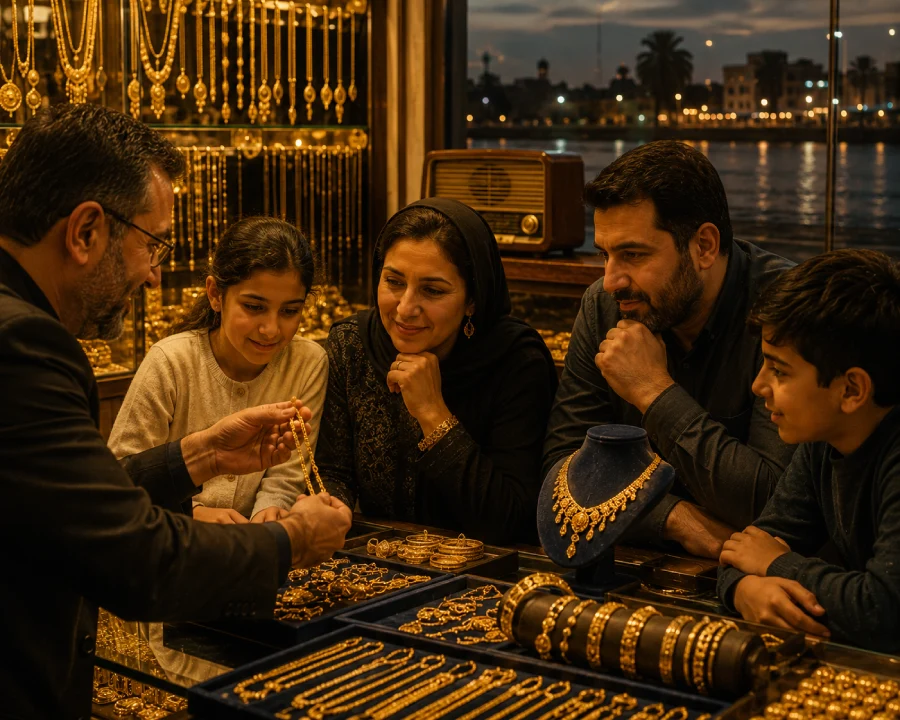
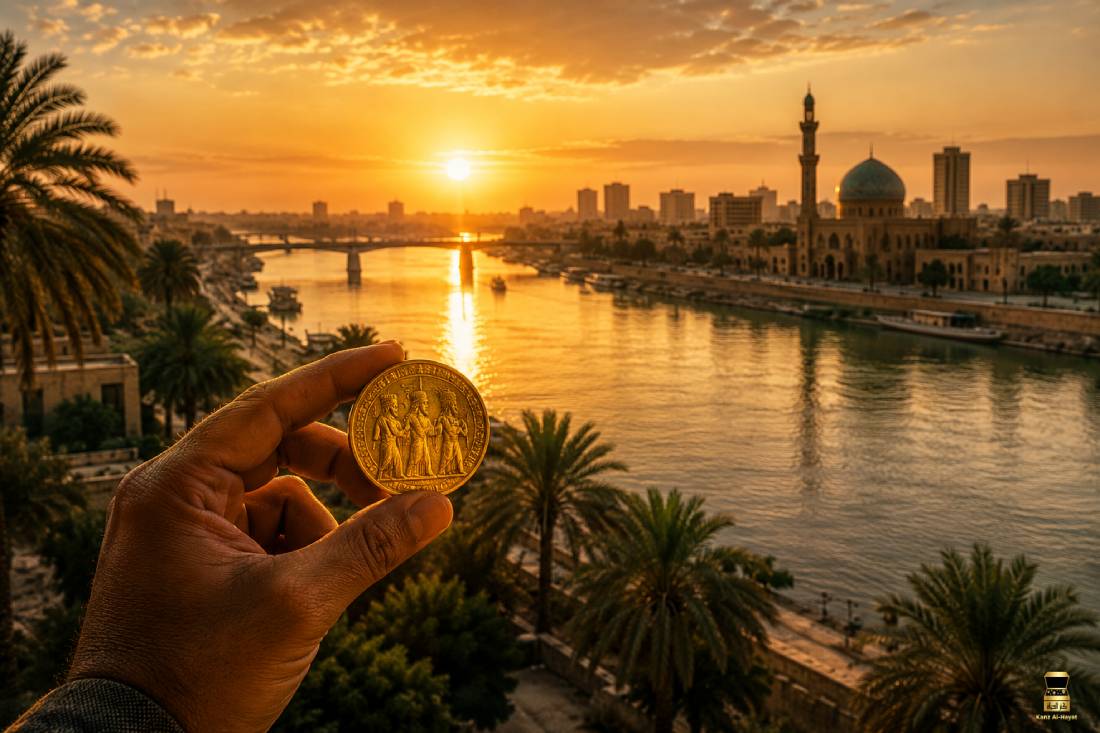
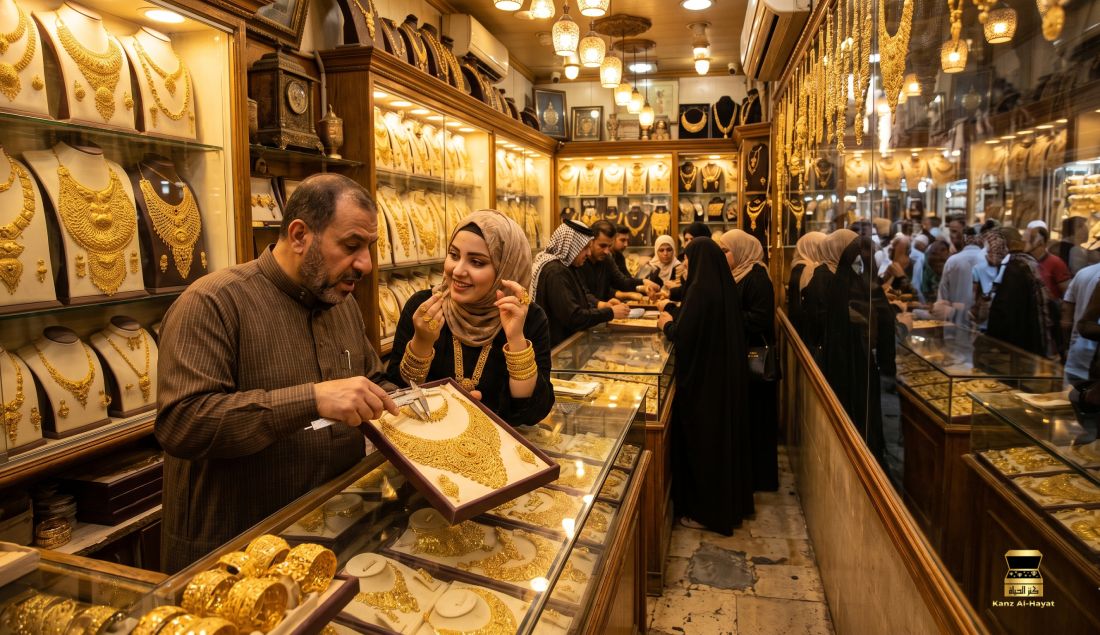
For Iraqi families who hold gold across generations, this week affirms its role. Gold has climbed three straight days precisely because it protects against both futures: if peace lands, falling rate expectations (September hike odds have collapsed from 81% to 57%) lift it; if war erupts, safe-haven demand does. Gold near $4,130 is about 26% below January’s record, up roughly 21.6% over the past year, with central banks having bought 244 tonnes in the first quarter and Chinese institutional funds defending every dip. Friday’s US jobs report is the week’s other major event.
For a nation that has weathered wars, sanctions, and upheaval across generations, these 48 hours are ones to watch with both hope and steadiness. Iraq’s future prosperity runs through a reopened Hormuz — and for the first time in this long war, that outcome has a stated timetable. May the region find the calmer path.
Today’s prices: 24K — $132.80/gram | 22K — $121.75/gram | 21K — $116.20/gram
All prices USD. Indicative only. Highly volatile market. Please confirm in store.