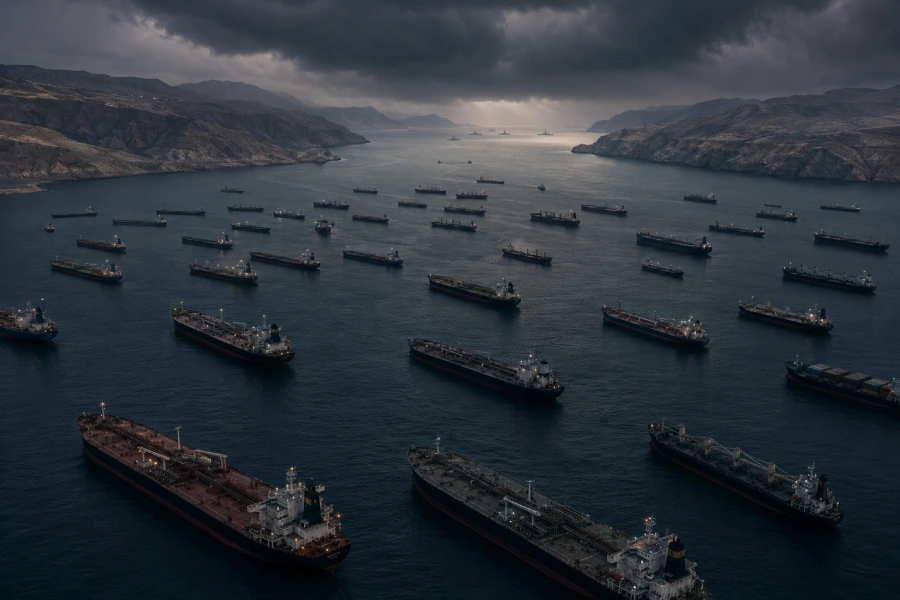


This Monday July 13 brings the most serious escalation of the entire conflict for Iraq and the Gulf region. Over the weekend, the ceasefire collapsed entirely. Iran formally declared the Strait of Hormuz closed after the Revolutionary Guard struck a container ship. The United States launched a third round of strikes hitting approximately 140 Iranian military targets. Iran retaliated against US bases, with air defenses activated across Qatar, Bahrain, and the UAE. And in an unprecedented step, Qatar’s Transport Ministry suspended all maritime vessel activity — the first blanket maritime suspension by any Gulf state since the war began. Meanwhile gold has fallen to around $4,020 per ounce. For Iraq, this is the most serious test yet.
The economic implications for Iraq are direct and severe. As OPEC’s second-largest producer, with more than 90% of government revenue tied to oil exports through Gulf waterways, Iraq depends entirely on the Strait of Hormuz remaining navigable. Iran’s declared closure — which US officials reject, creating a stalemate of contradictory statements — threatens to halt Iraqi oil exports to Asian markets once again. Qatar’s suspension of all maritime activity signals how seriously the region’s states now view the risk. Trump has announced the US will reimpose its naval blockade of Iranian ports and act as “guardian” of the strait, charging a 20% toll on transiting vessels — a development that would add costs to every barrel that moves.
Oil prices have surged in response. Brent crude jumped 7.1% to $81.40 a barrel and US crude rose 7.2% to $76.50, both at their highest since mid-June and up roughly 9% over five days. For Iraq, higher oil prices per barrel would normally be welcome — but they are worth nothing if the oil cannot physically reach buyers. Disrupted shipping, elevated war-risk insurance, and blocked export routes can more than offset any price gain. This is the painful arithmetic Iraq now faces.
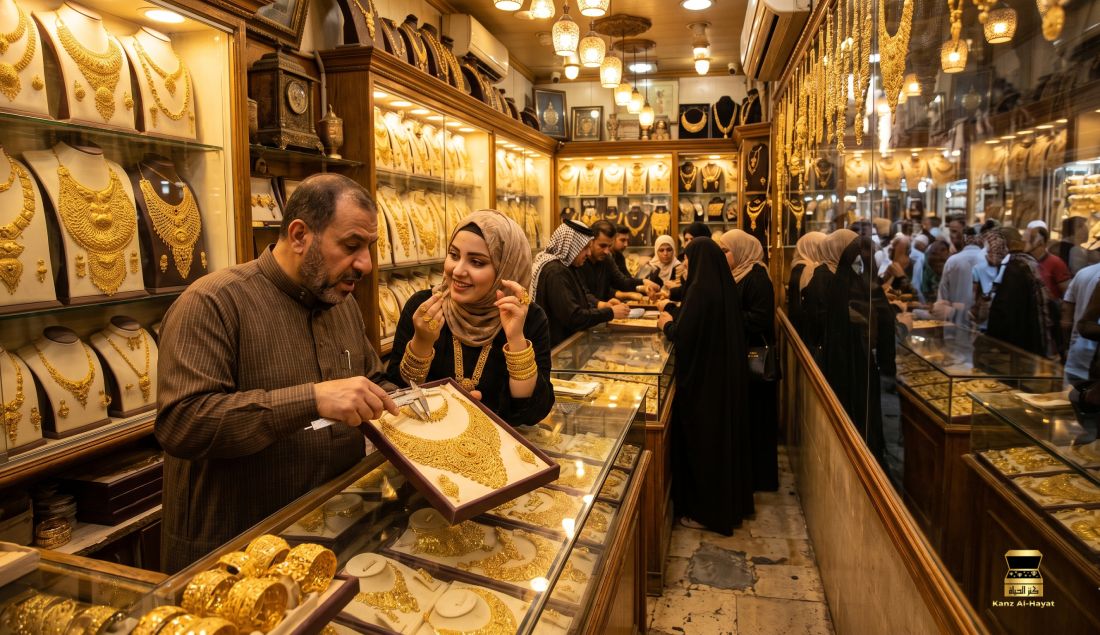
For Iraqi gold buyers, the paradox continues. Despite war on the region’s doorstep and the closure of Hormuz, gold has fallen — because the oil surge drives inflation, which drives expectations of US Federal Reserve rate hikes (now near 70% for September), which strengthens the dollar and pressures gold. This is why gold is down more than 2% today rather than up.
Yet for Iraqi families who hold gold as a store of wealth across generations, the long-term case remains firmly intact. Gold at $4,020 is roughly 28% below January’s record of $5,597 — the deepest discount of the year — yet still up 19.5% over the past twelve months. And critically, the world’s central banks are buying aggressively into this weakness: China’s central bank reported its largest monthly increase in gold reserves in more than two and a half years in June. The most patient, most strategic buyers on earth are accumulating precisely when the price is lowest.
For a nation that has weathered wars, sanctions, and upheaval across generations, this week is a hard one. The situation is dangerous and the economic risks are real. But gold’s enduring role — as the asset that preserves wealth through precisely these kinds of crises — has never been more relevant. This week’s key events: Fed Chair Warsh testifies before Congress on Tuesday, and the June CPI inflation report arrives.
Today’s prices: 24K — $130.00/gram | 22K — $119.20/gram | 21K — $113.75/gram
All prices USD. Indicative only. Highly volatile market. Please confirm in store.